Soft Shell Crab
About
- The blue crab (Callinectes sapidus, meaning “savory beautiful swimmer”) is prized for its sweet, delicate flavor and tender meat.
- Soft-shell crabs, or “peelers,” are popular because the entire crab can be enjoyed, not just the claws.
- As the only restaurant on Hilton Head Island with an in-house shedding operation, Hudson’s serves soft-shell crab with unrivaled softness and freshness.
Our Process
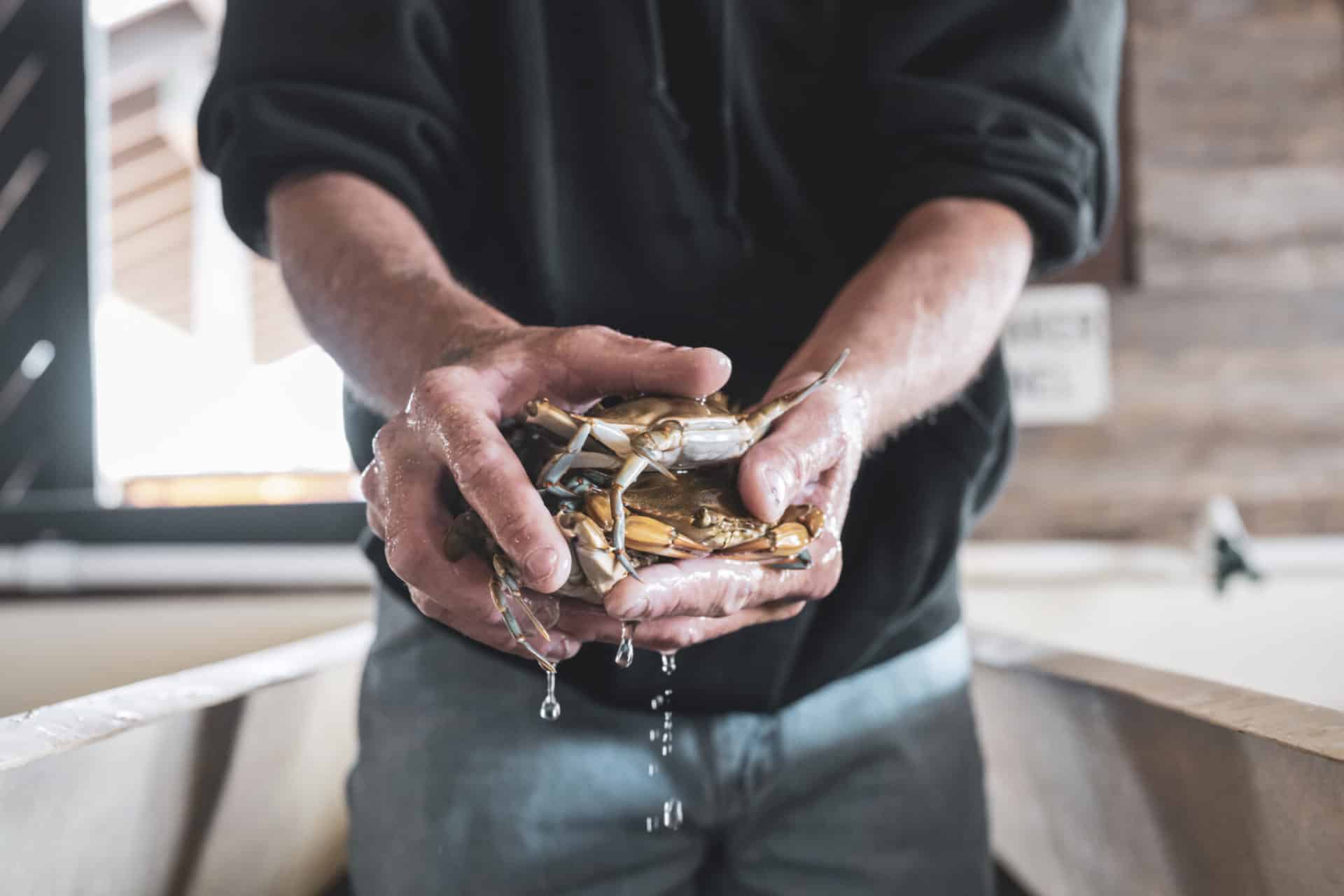
- Melanie Padgett and her husband Jim, continuing a family tradition, set crab pots to catch crabs nearing their molt.
- The crabs are kept in a custom seawater system and monitored 24 hours a day until they shed their shells.
- Guests can even watch the process in the packing house, making it a unique and educational part of dining at Hudson’s.
- Learn more about Hudson’s achieves the freshest soft shell crab.
Season
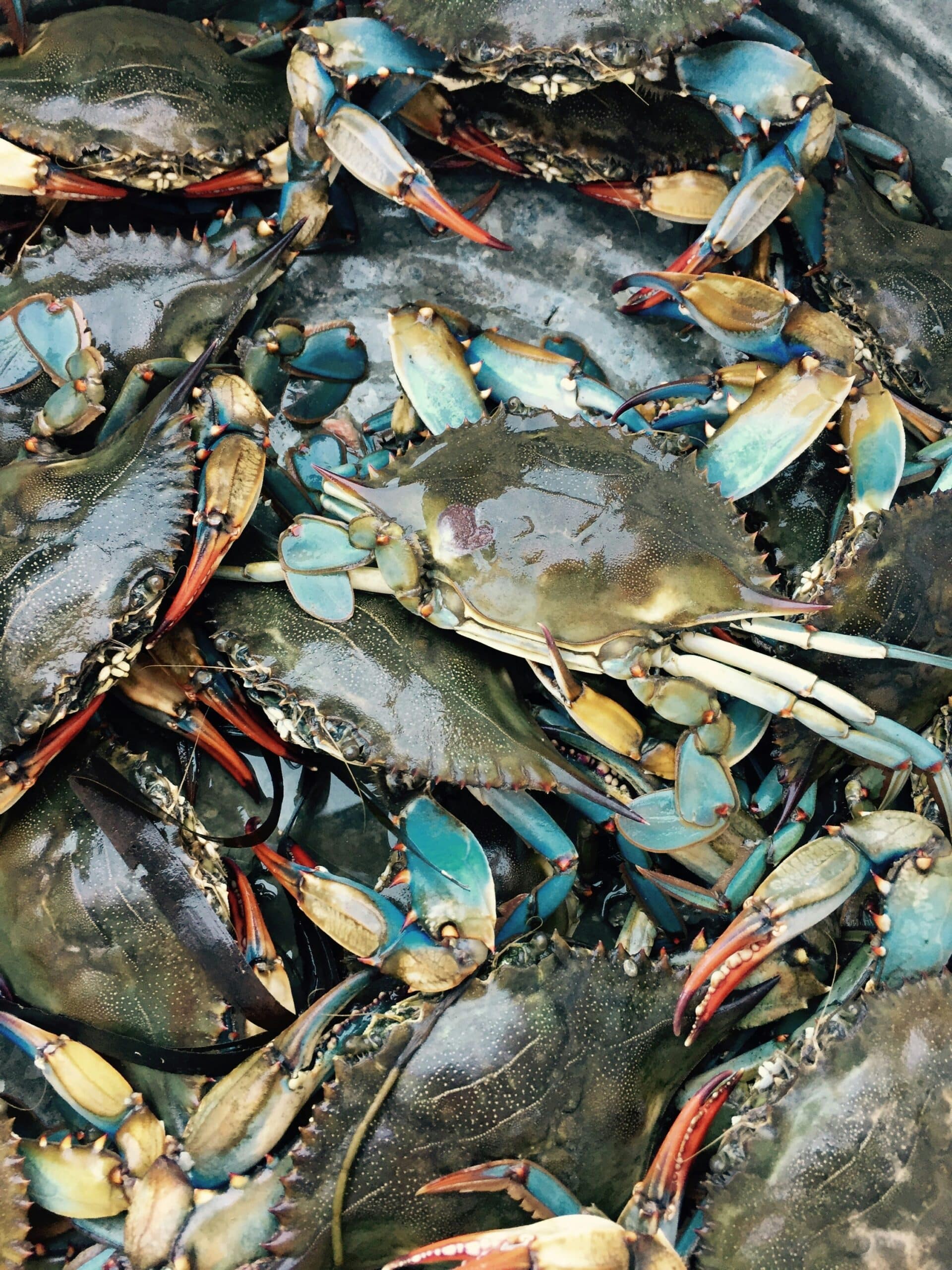
- Local blue crabs molt each spring when the water warms, shedding their hard shells and leaving a tender soft body.
- The soft-shell season lasts only 4–5 weeks, depending on weather and water temperature.
Stone Crab
Our Process
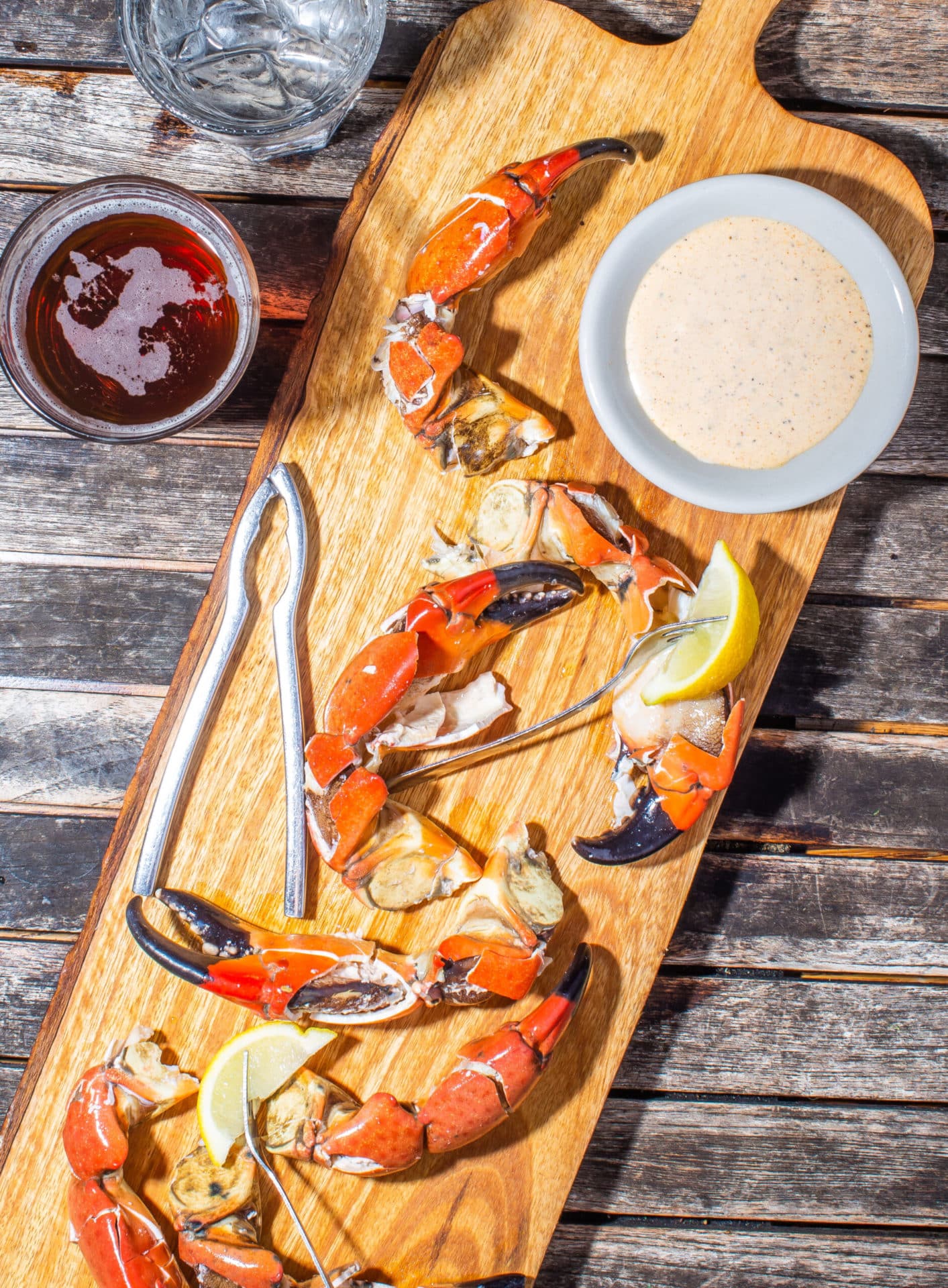
- Commercial crab fishermen Melanie Padgett and her husband Jim set about 200 crab pots between Beaufort and Hilton Head.
- Only one claw is taken from each stone crab, and the crab is then released back into the wild to regenerate.
- Melanie delivers roughly 300 pounds of claws each week.
- As she nears the dock, Melanie calls ahead so the claws can be blanched within minutes of harvest, ensuring the meat separates cleanly from the shell.
Seasons
- After blue crabs shed their shells in the spring, they vacate larger creeks such as Skull Creek and Calibogue Sound.
- Their cousin, the stone crab, migrates into these areas.
- Stone crab claws are harvested and enjoyed at Hudson’s during the spring, summer, and early fall.
How They Are Served
- Stone crabs are most often served chilled.
- Immediate blanching after harvest preserves the flavor and allows the meat to separate from the shell.
- Many seasoned guests even await Melanie’s arrival at the dock to place their order for the firm, sweet claws.
Blue Crab
About
- The blue crab (Callinectes sapidus, meaning “savory beautiful swimmer”) is prized for its sweet, delicate flavor and tender meat.
- Soft-shell crabs, or “peelers,” are popular because the entire crab can be enjoyed, not just the claws.
- As the only restaurant on Hilton Head Island with an in-house shedding operation, Hudson’s serves soft-shell crab with unrivaled softness and freshness.
Season
- Blue crabs are available year-round in the Lowcountry.
- They are at their prime and most abundant from May to August.
Snow Crab
About
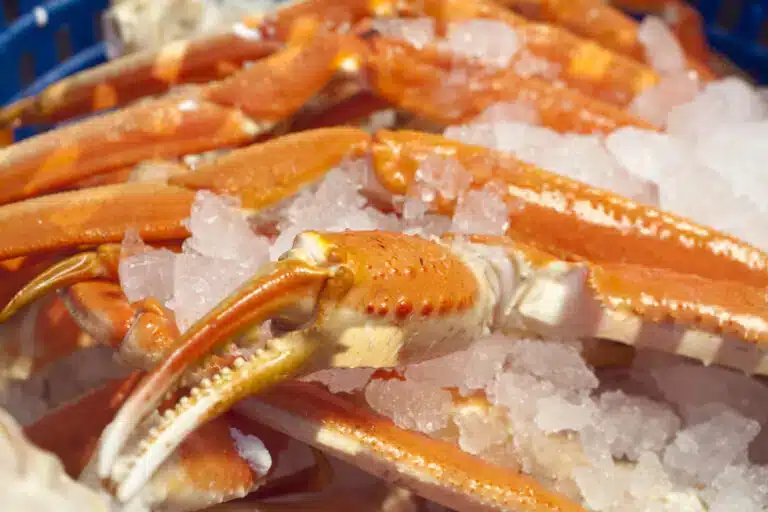
- Though found in snowy environments, their name comes from the snow-white color of their meat.
- They are closely related to the larger king crab.
- Snow crab meat has a sweet, slightly briny flavor with a firm texture.
Origin
- Snow crabs, also known as queen crabs, are found in the North Atlantic and North Pacific.
- They prefer deep, cold-water conditions.
Frequently Asked Questions
Q: What types of crab can I enjoy at Hudson’s?
A: We proudly serve soft-shell crab, stone crab, blue crab, and snow crab. Each offers its own unique flavor and seasonality, from tender soft-shell peelers to firm, briny snow crab.
Q: When is soft-shell crab season?
A: Local blue crabs molt in the spring when the water warms. The soft-shell crab season lasts just 4–5 weeks, making it one of the most anticipated times of year at Hudson’s.
Q: What makes Hilton Head oysters and crabs so flavorful?
A: The high salinity of our waters gives local shellfish, including blue crabs, an intense brininess and sweetness. Blue crabs are prized in the Lowcountry for their rich, buttery flavor, especially from May to August when they’re most abundant.
Our Seafood
CRAB
SHRIMP
OYSTERS
FISH